Try it yourself
The app, working, right here
This is a real prototype of Khetora, not a mockup — log in with a phone number, browse land and equipment, check mandi prices, and chat with Khetora Saathi.
Prototype — demo data throughout. Nothing you type here is saved or sent anywhere.
4
Districts we surveyed before writing a line of code
6
Things the app does, all in one place
86%
Of Indian farmers hold under 2 hectares
₹0
Raised from outside investors so far
Inside the Khetora app
Six things, one app, everything a farmer actually needs
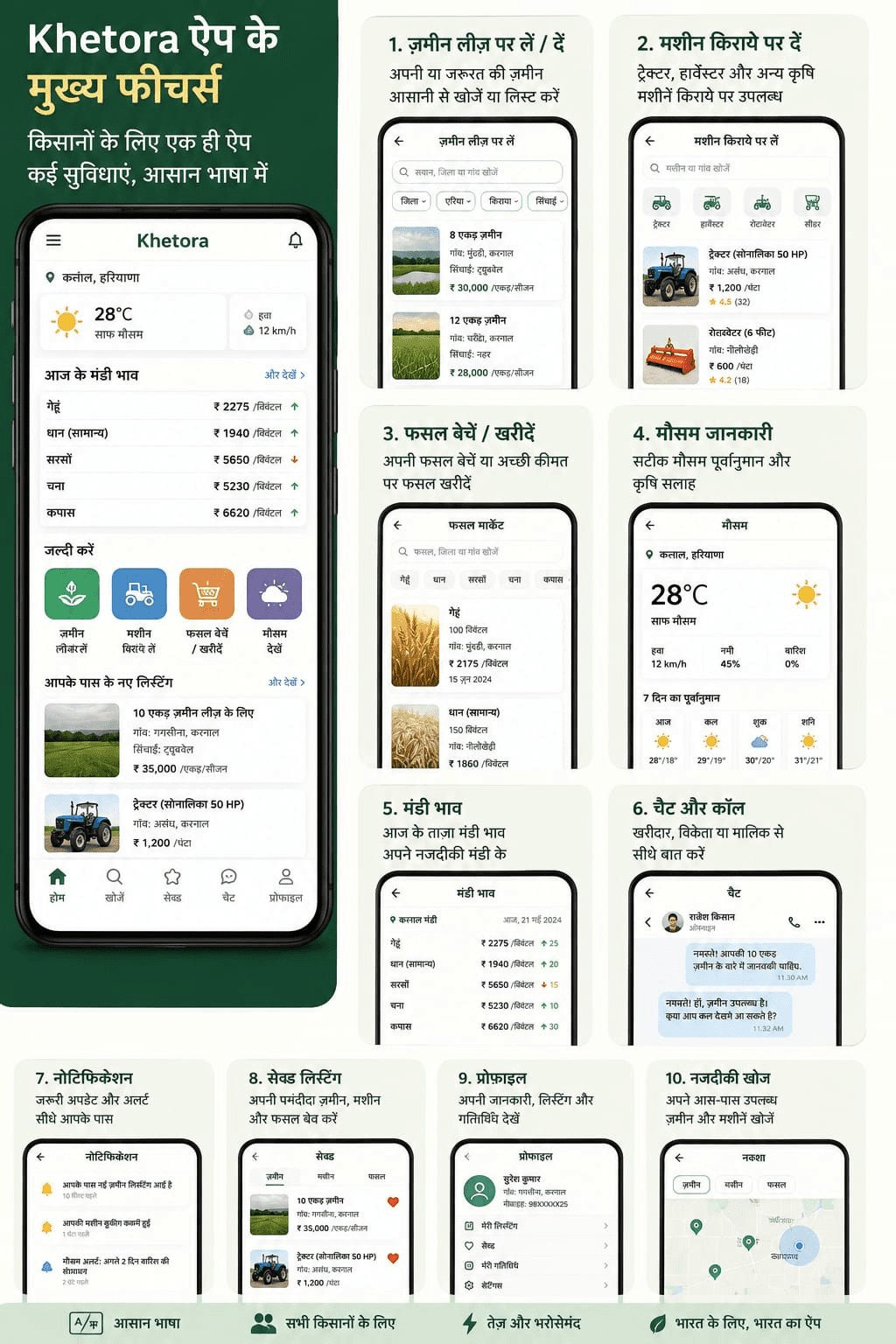
Verified land leasing
Find land to farm, or list your own for lease, with Aadhaar verification and a free phone consultation to walk you through it.
Equipment rental & resale
Tractors, harvesters, rotavators and seeders, by the hour or the acre, from someone nearby — insured by default.
AI weather & farm advisory
A 7-day forecast plus plain-language advice for your crop and your field, not a generic district-wide alert.
Live & predicted mandi prices
Today’s rate from your nearest mandi, updated daily, plus an AI read on where prices are headed.
Khetora Saathi
One AI assistant with access to the whole app — ask it anything in your own language instead of hunting through menus.
Government schemes, simplified
Every central and Haryana scheme you may be eligible for, explained in plain language, with a direct link to apply on the official site.
Why Khetora exists
Most farming apps are built for investors.
Across India, 86.1% of farmers work less than two hectares. The average holding is 1.08 hectares, and it keeps getting smaller as families divide land across generations. In southern Haryana alone, close to 60% of farmers fall into this small-or-marginal category.
That farmer doesn’t need another dashboard full of charts. He needs to know today’s mandi rate before he loads the trolley, needs to know if rain is coming before he cuts the crop, needs to know which government scheme he actually qualifies for, and needs to reach a buyer or a landowner without a middleman taking the first cut of the conversation.
So we started with the slower part first: surveying farming families across Bhiwani, Hisar, Rohtak and Charkhi Dadri districts, close to CCS Haryana Agricultural University, before a single line of the buyer-facing app got written. We’re building, updating and re-updating Khetora around what that survey — and every response since — actually told us, starting with a focused pilot in Hisar and one adjoining district.
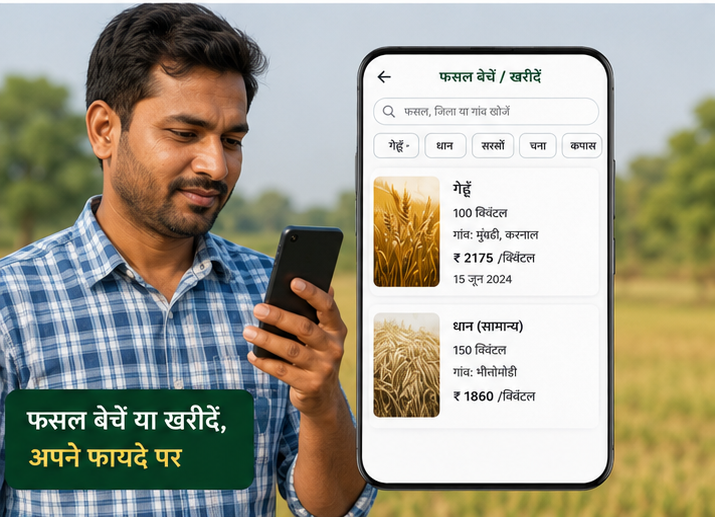
₹18,496
Average monthly income of a Haryana farming household — second highest in India after Punjab (NABARD NAFIS)
Phase 1 — months 1–6
Hisar, and one district next to it. One relationship at a time.
Pilot launch, Haryana
Before Khetora is an app on every phone, it’s a free phone consultation that walks a farmer through Aadhaar verification, a mandi price that arrives each morning in the language a farmer actually speaks at home, and a government scheme explained in one sentence instead of a government PDF. We’re moving deliberately here — the pilot is sized to what our small team can actually stand behind, not to a download number.
Land leasing, free consultation included
List or find land with Aadhaar verification, and a free phone call from our team to walk you through every step.
Daily mandi prices, in your language
Wheat, mustard, cotton and paddy rates from nearby mandis, updated daily. No login needed to start.
AI weather & farm advisory
A 7-day forecast with plain-language advice for what to do today, for your crop specifically.
The government schemes hub, from day one
PM-KISAN, PMFBY, KCC and Haryana schemes, rewritten simply, with a direct apply link — part of the very first build.
Phase 2 — months 7–12
From one pilot to Haryana’s wheat-and-paddy belt
Once Phase 1 holds, Phase 2 expands Khetora to 4–5 districts across Haryana and turns it into the full working app: equipment rental with insurance live, a direct crop marketplace, and Khetora Saathi — our AI assistant — launching in full. None of this is a template borrowed from somewhere else; it’s built on what the Bhiwani, Hisar, Rohtak and Charkhi Dadri survey, and the Phase 1 pilot, actually taught us.
A choice in how you get verified
Keep the free phone consultation, or choose a paid in-person field visit — whichever a farmer prefers.
Equipment rental marketplace, insured
Tractors, rotavators, harvesters and laser levellers, rentable by the hour or acre, with an insurance partner live so damage during a rental doesn’t fall on the owner alone.
Khetora Saathi launches in full
One AI assistant across the whole app — ask it what you need in your own language, and it finds the listing, the price, or the scheme for you.
Direct crop marketplace
Farmers list their harvest, verified buyers make offers, and the layers of commission that usually eat a small farmer’s margin get cut out.
Predictive mandi prices
Early wholesale-buyer partners come onboard, and the price layer moves from live rates to a genuine forecast.
Still nothing a farmer pays for
This stage is funded by featured listings and insurance-referral commission — sources of revenue that never touch a farmer’s pocket.
Phase 3 — months 13–18
Deeper into Haryana, and beyond the app
Phase 3 takes Khetora to 8–10 districts across Haryana — a deliberately narrower footprint than full state coverage, matched to a small team’s actual capacity, with wider expansion held for the next round of funding. Two problems sit underneath everything we’re doing by this stage: small farmers going into debt over a single bad season, and good harvests losing value for want of price intelligence.
My Farm — an AI farm planner
A profile for your own fields that Khetora Saathi actually remembers, so its advice gets more specific over time, not less.
AI price and demand intelligence
Wholesaler demand-matching layered on top of mandi data, so a farmer sees where real buying interest is, not just today’s rate.
Monetisation begins — never from farmers
Ads, an optional low-cost subscription, and commission from wholesalers and large landowners or equipment dealers, so the free-for-farmers model keeps paying for itself.
Beyond Haryana’s borders
The same district-by-district approach, next in the neighbouring wheat-and-paddy belts of Punjab and western Uttar Pradesh.
How it works
Five steps, in the order a farmer actually experiences them
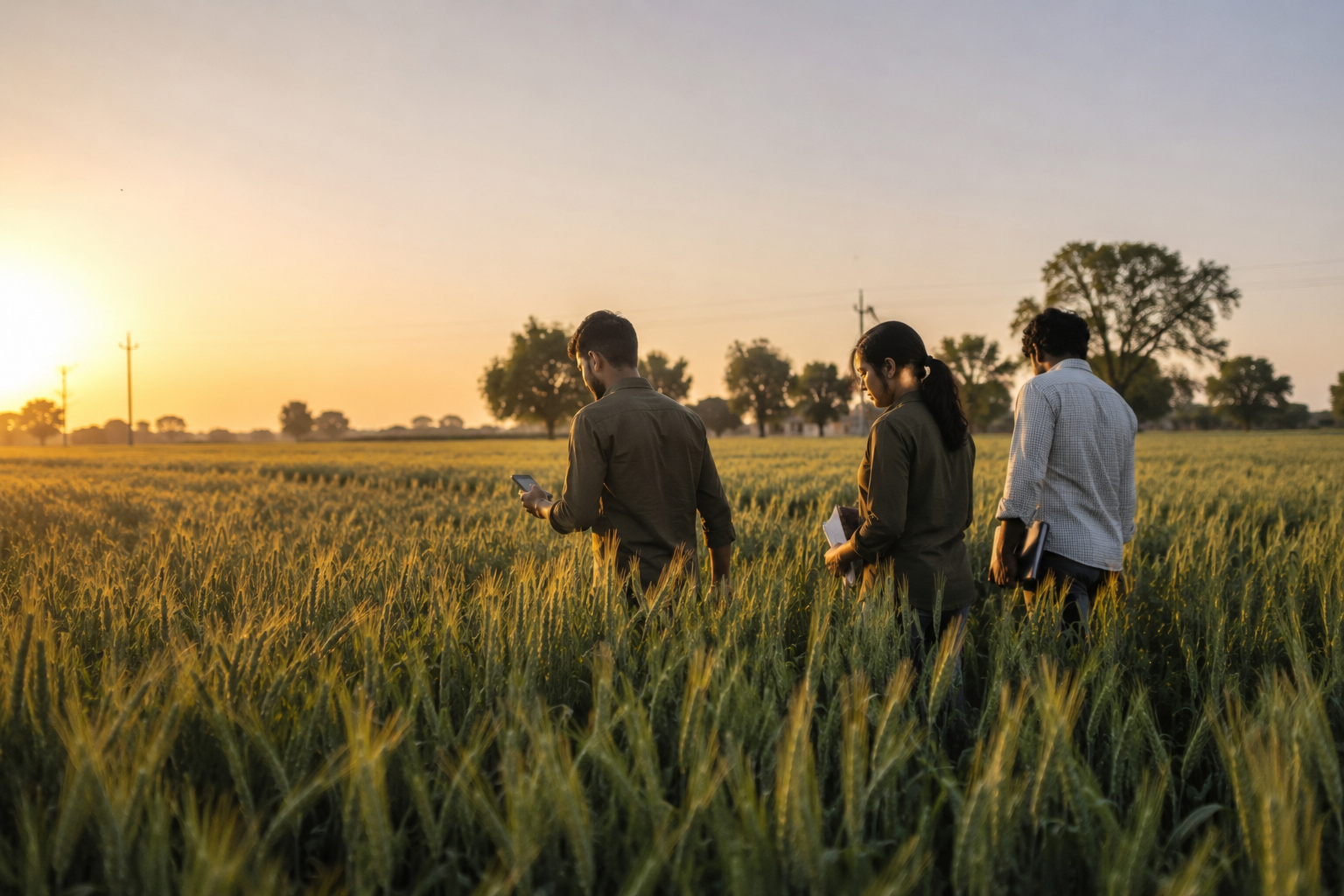
No jargon, no forced app download on day one. A free phone consultation comes first.
- STEP 1
You get a free phone consultation
A Khetora team member calls you, in your language, and walks you through Aadhaar verification and what the app can do — before you open anything.
- STEP 2
You join with just your phone number
No forms, no paperwork on day one. A phone number and a WhatsApp message is enough to get started.
- STEP 3
You see prices, weather, and schemes in your language
Everything arrives the way you actually speak at home: English, Hindi, Punjabi or Haryanvi, your choice, changeable anytime.
- STEP 4
You connect directly — no middleman in the chat
Talk straight to a buyer, a landowner, or an equipment owner. The conversation stays between you and them.
- STEP 5
You ask Khetora Saathi instead of hunting for it
One AI assistant, in your language, that knows the whole app — land, equipment, weather, mandi and schemes — so you don’t have to.
Where we started listening
Our four survey districts
We conducted our farmer survey in Bhiwani, Hisar, Rohtak and Charkhi Dadri districts, close to CCS Haryana Agricultural University. Khetora was created, and keeps being updated, around what those responses — and every response since — actually told us.
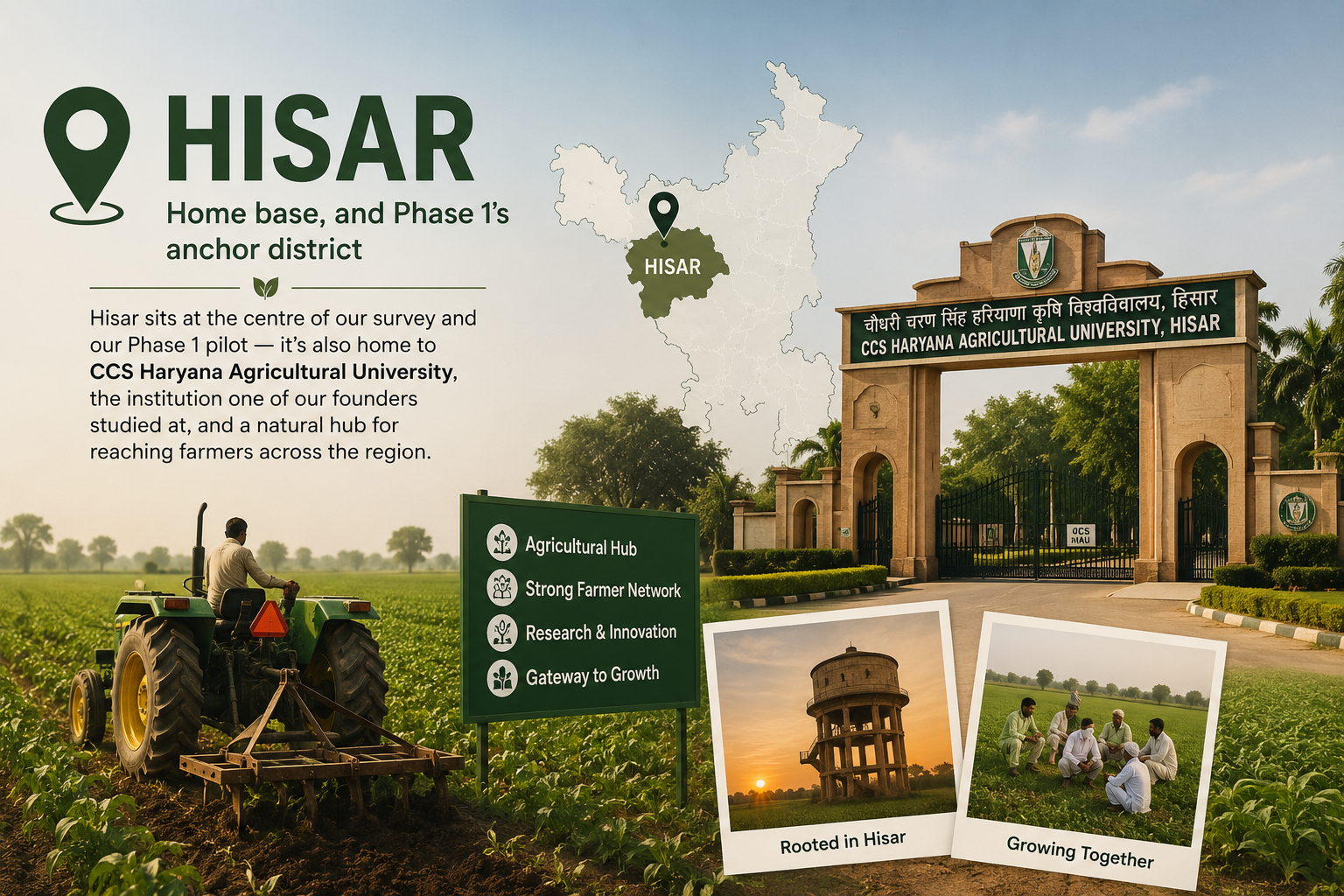
Hisar
Home base, and Phase 1’s anchor district
Hisar sits at the centre of our survey and our Phase 1 pilot — it’s also home to CCS Haryana Agricultural University, the institution one of our founders studied at, and a natural hub for reaching farmers across the region.
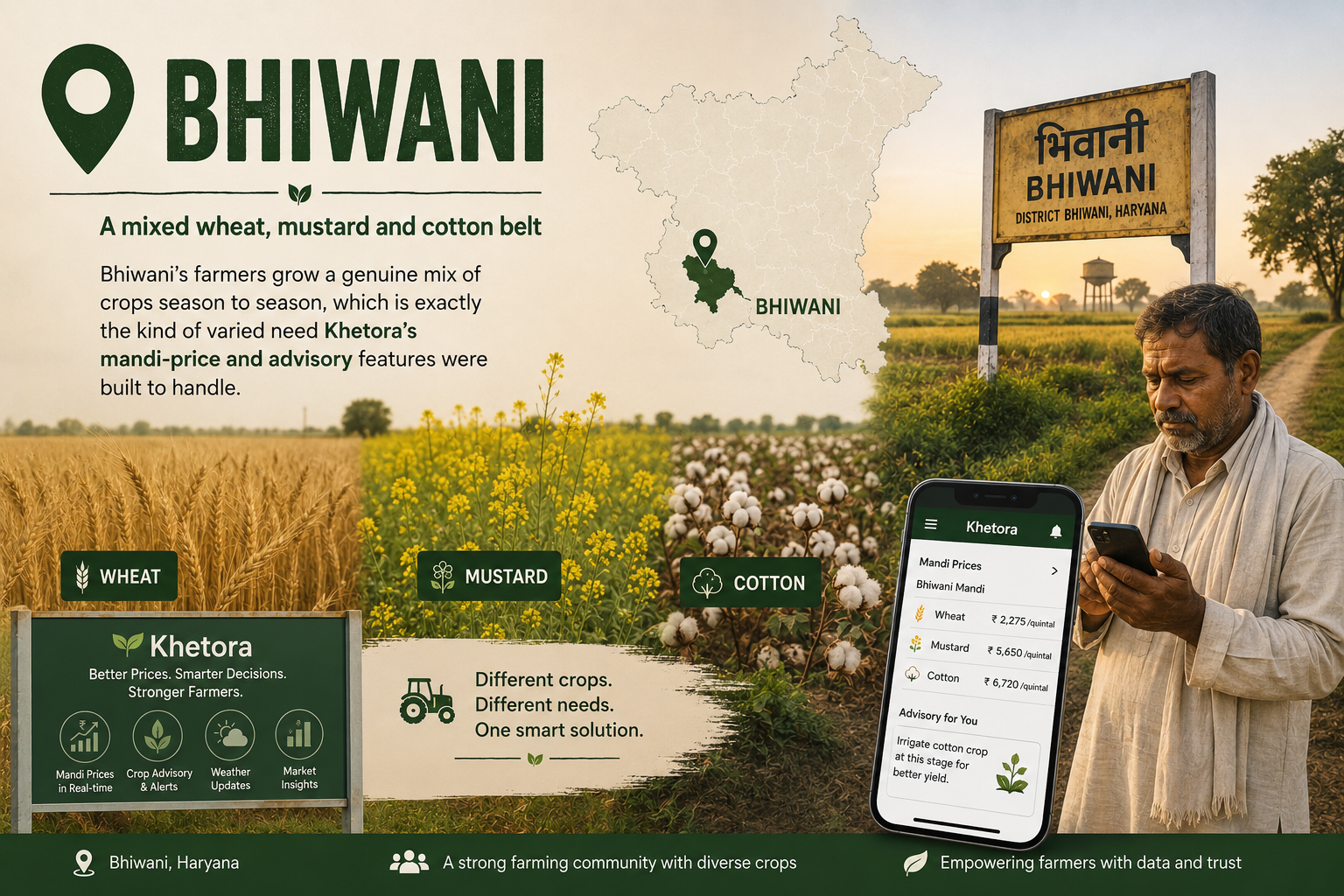
Bhiwani
A mixed wheat, mustard and cotton belt
Bhiwani’s farmers grow a genuine mix of crops season to season, which is exactly the kind of varied need Khetora’s mandi-price and advisory features were built to handle.
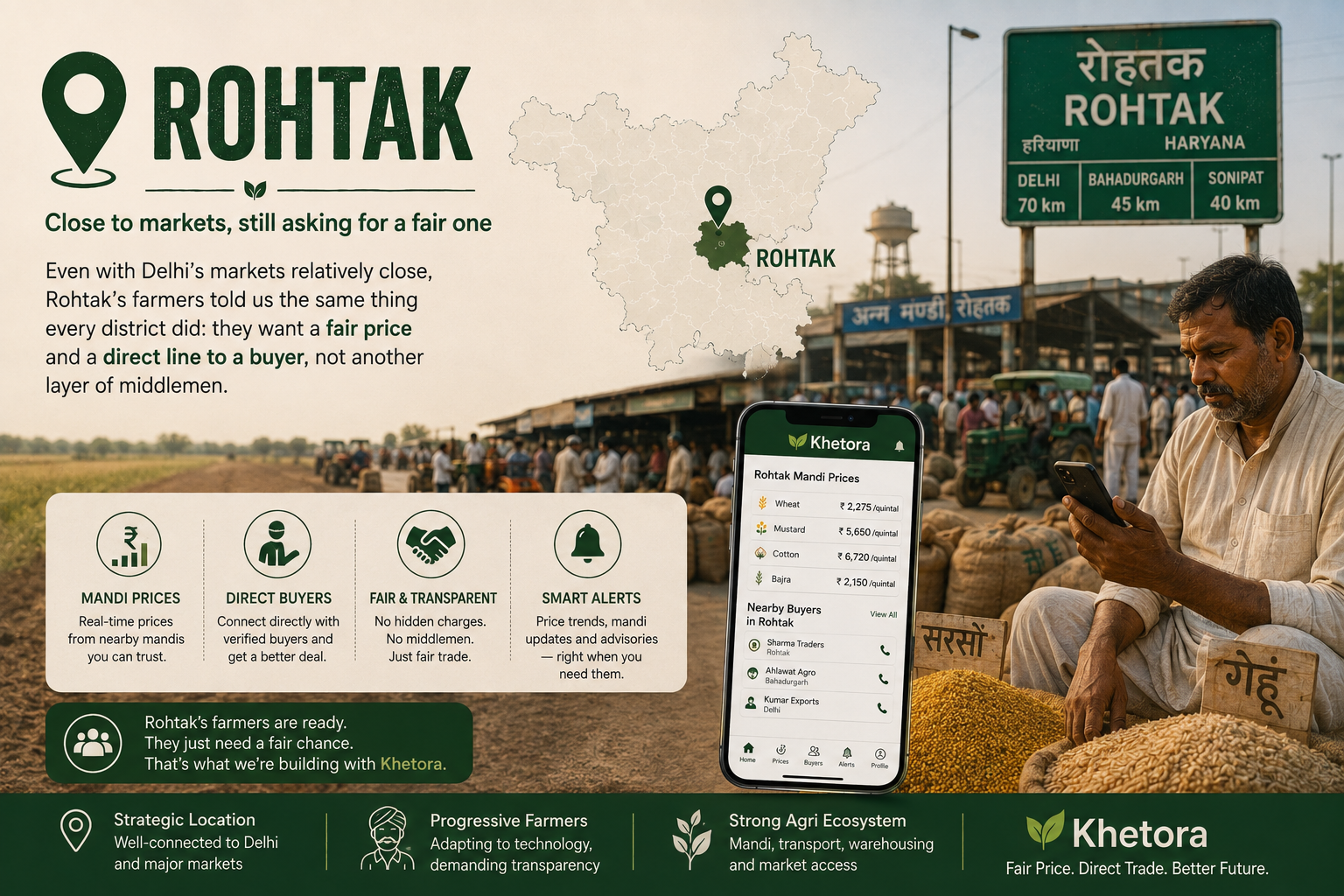
Rohtak
Close to markets, still asking for a fair one
Even with Delhi’s markets relatively close, Rohtak’s farmers told us the same thing every district did: they want a fair price and a direct line to a buyer, not another layer of middlemen.
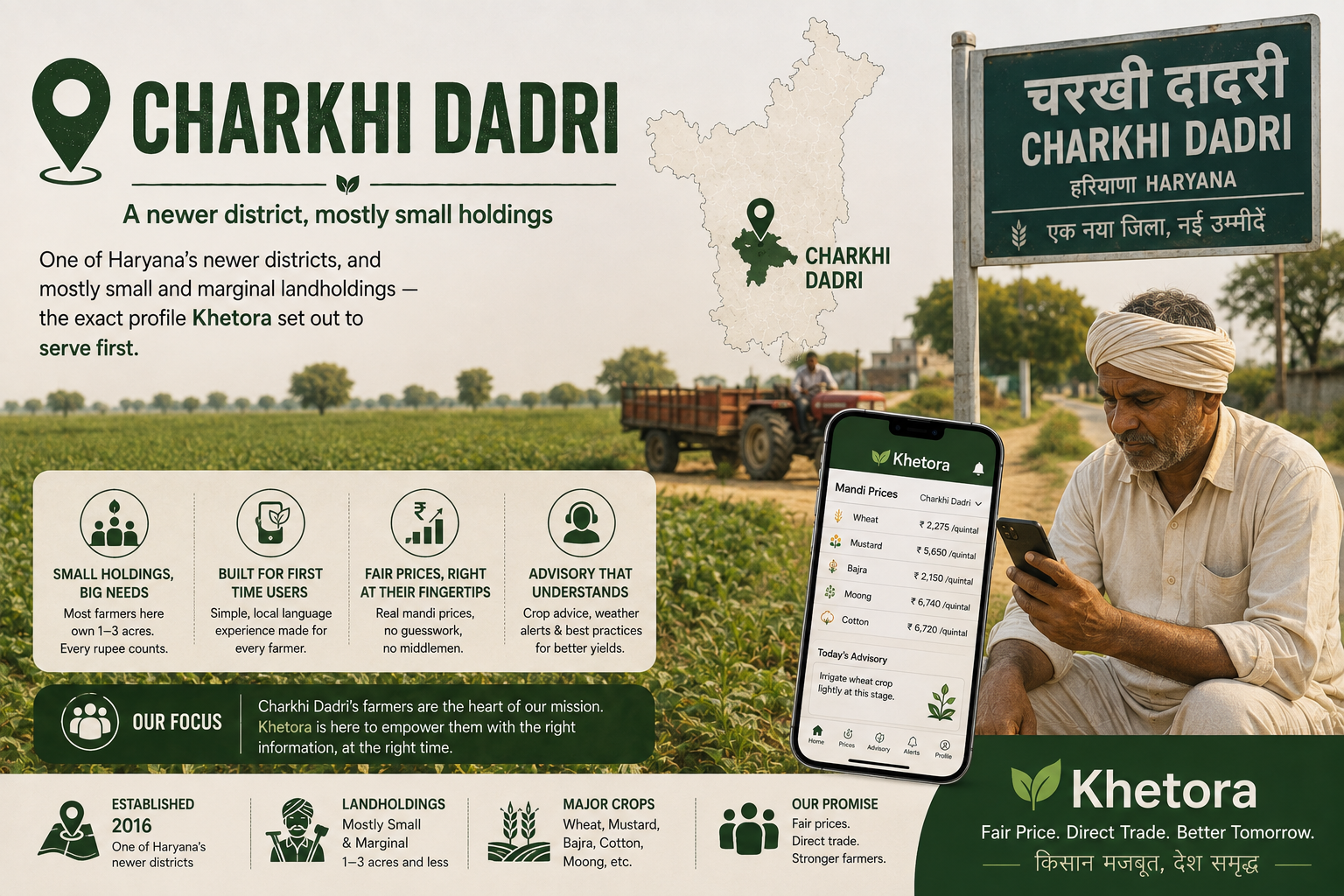
Charkhi Dadri
A newer district, mostly small holdings
One of Haryana’s newer districts, and mostly small and marginal landholdings — the exact profile Khetora set out to serve first.
Who’s building this
Self-funded so far, on purpose
Khetora hasn’t taken outside investment yet. That’s a choice we made deliberately for as long as possible — it means the product was shaped first by what the Bhiwani, Hisar, Rohtak and Charkhi Dadri survey told us farmers needed, not by a growth number for someone’s quarterly update. We’re now raising our first outside capital, starting with agriculture-focused institutions, to fund the Phase 1 pilot properly.
We’re a small, two-founder team, building the technology in-house with interns and informal help from senior engineers rather than a paid agency — which keeps the budget honest and keeps every decision close to the farmers we surveyed.
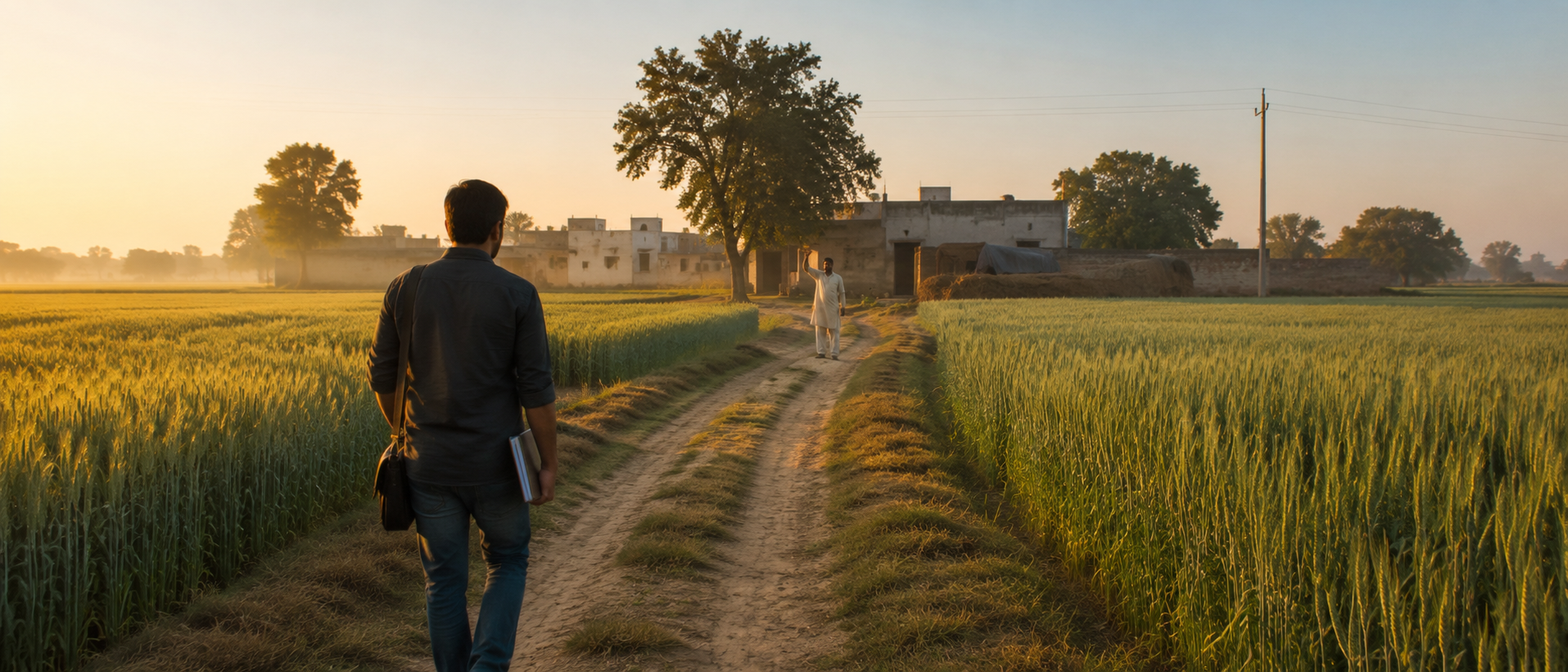
Two founders, one from agriculture and one from engineering:
Sunidhi
Founder
Undergraduate degree from CCS Haryana Agricultural University, Hisar, and an MBA from IIT Bombay (2025). Full-time on Khetora.
Rahul Pal
Founder
Pre-final-year Chemical Engineering student at IIT Bombay, guiding product and technical direction part-time until graduation, then full-time.
No outside investors, yet
Every rupee spent so far has come from the founding team, which keeps every decision accountable to farmers first.
Survey-first, not app-first
We measure Phase 1 readiness by what Bhiwani, Hisar, Rohtak and Charkhi Dadri actually told us, not by app installs.
Built in Haryana, for Haryana first
Every early decision is shaped by what our four survey districts actually said they needed, before we expand further.
Where our numbers come from
Every statistic on this page is sourced. Here’s exactly where from.
- 86.1% of Indian farmers hold under 2 hectares; average holding 1.08 ha
- Agriculture Census 2015–16, Government of India
- Haryana farming households earn ₹18,496/month on average, 2nd highest in India after Punjab
- NABARD, National Bank for Agriculture and Rural Development — NAFIS survey
- About 60% of farmers in South Haryana are small or marginal landholders
- District-wise Agricultural Growth in Haryana study, JETIR
- Bhiwani, Hisar, Rohtak and Charkhi Dadri district profiles and major crops
- Public agricultural and district records, Government of Haryana
- Government scheme details — PM-KISAN, PMFBY, KCC and Haryana schemes — rewritten in plain language by Khetora Saathi
- myScheme.gov.in, pmkisan.gov.in, pmfby.gov.in and respective official scheme portals
- Rural India crossed 488 million internet users in 2024, rural penetration reaching 79%
- Kantar ICUBE 2024 / IAMAI report
Talk to us
Farmer, landowner, or just curious — we’d like to hear from you
The fastest way to reach us is WhatsApp, the same way we talk to farmers across our survey districts.
We read every message ourselves. No call centre, no chatbot.